Showing posts with label hardcore. Show all posts

Sunday, August 9, 2009

Agnostic Front - Victim in Pain


she says she likes the agnostic front/they've got crazy fast guitars

A definitive attribute of early hardcore was its ability to push boundaries, be they political or musical. Hardcore advocated a different message and a different style with which to promote it, eschewing the almost glam sensitivities of late 70's punk rock for a more stripped down, back-to-basics approach. Shaved heads eclipsed the mohawk, and the ideals of punk shifted from pseudo-counter-culturalism to the notion of a scene based on acceptance (even if it didn't always abide by those ideals).

But as the 80's progressed, it became clear that the new flag-bearers of the hardcore landscape would not be the ones who played it safe and stuck only to the formulas established by the early luminaries of the genre; you can only re-hash Minor Threat so many times before people stop listening. And so hardcore pushed out of its box. Some bands experimented, infusing shots of country and Americana into their approach, crossing boundaries and gaining the closest thing hardcore had had to a major audience yet. Others slowed down the tempo and became more introspective, focusing their songwriting abilities rather than submitting to the 'harder, faster louder' approach borne by earlier bands. And others still went in the exact opposite direction, pushing the envelope in the only way they could, by taking hardcore and making it heavier, faster, louder and more aggressive than ever before. Agnostic Front belonged to this last group.

Unsurprisingly given their playing style, Agnostic Front hailed from New York City, a place whose hardcore scene they eventually helped define (alongside many other local bands) with their blending of grimy, down-turned punk and fast-paced thrash metal heaviness. In 1984, the band broke out with their seminal hardcore album Victim in Pain, which, for better or for worse, was hugely influential in the NYHC scene. This lead to further crossovers between hardcore and thrash metal, not the least of which by Agnostic Front themselves, that, depending on your point of view, either showcase hardcore at its most aggressive and fully realized or at its most mindlessly macho and insular. None of which takes away the fact that, as Victim in Pain shows us, Agnostic Front were a force to be reckoned with.


Listening to the album, the guitars are no doubt the first thing to be noticed. They have a very dark quality to them that seems universal in 80's punk, be it American or British, and the rate at which they're played borders on suffocation. Combined with the forceful and often relentless drumming, the whole package blares about like a sonic buzzsaw. While the song structures are fairly typical for hardcore, there's still something notable in the ferocity with which they're played. And yet, in spite of this when the band relaxes and takes their fingers off the button just a little bit, this results in Agnostic Front's best material. The typical Agnostic Front song volleys back and forth between the aforementioned buzzsaw-style passages and a selection of more measured parts that help to reel in the aggression, and thereby put a manner of emphasis on it. This isn't to say that the occasional straight-up barn-burner isn't there, nor to say that it doesn't absolutely kill - "Hiding Inside" is as strong a song as you'll find from the Agnostic Front. Just to say that when it comes to tracks like "Blind Justice" and "Last Warning", it's the comparably slower sections that make these songs notable, while the blast beat-style drum sections work only to de-sensitize the listener to the song's better sections.

Blink and you'll miss it - eleven songs, fifteen minutes are all that comprise Victim in Pain, but that doesn't make it any less of a hardcore classic. While their songwriting often suffered from immaturity, and while they may not hold up as well to modern ears as some of their more experimental and more influential peers, Agnostic Front still feel like the masters of their own niche: heavier than hardcore, more down-to-earth than metal, and as driven as anyone or anything else out there.


victim in pain

Thursday, July 16, 2009

Union Young America - Kill the Man in Everything 7"


This is an absolutely fantastic 7" from mid-90's Ontario hardcore band Union Young America. Originally made in 1995, this three song EP is the group's only known release to date, and it features a sound similar to Admiral, or Three Penny Opera, or maybe a gruffer Native Nod. Complex, powerful jams that mix beautiful instrumental sparsity with an ear for melody and a predisposition for intense, excitable crescendos. The guitars in "Dem's Be Fighting Words" make this worth a listen on their own, but each song has at least one part that makes you think "wow", including the gentle, sinewy breaks during "Kevorkian" and the soaring choruses of "What You Know".

If the name alone doesn't intrigue you into giving this a listen, then I don't know what else I can say.

you bet i fucking tried

Friday, July 10, 2009

Modern Life is War - Modern Life is War 7"


Early Modern Life is War release, a three song 7" of noisy, aggressive, and above all else, passionate hardcore punk. From the throwback hooks and infectious chorus of "Destination Death or Better Days", to the fist-pumping chants of "Fakes Like You (Make Me Sick)", this EP shows off Modern Life is War at their most anthemic. And while their sound isn't as ground-breakingly fresh or well-developed as it would become, there is plenty of intersting work on display, with the dense riffs and seething desperation of "The Farmer's Holiday Association" sounding a lot like the band circa Witness. This is a great, blood-pumping release from one of the best hardcore bands of the decade. Raise your voice (and your fist) and sing along.

Modern Life is War 7"

Friday, July 3, 2009

Admiral - Admiral 7"


Admiral was a short-lived emo/hardcore band from the early 90's, the members of which would on to play in Navio Forge and Hoover as the decade wore on.

The group maintains the atmosphere and wall-of-sound guitarwork that would be prevalent on Navio Forge, but here it is imbued with a sense of melody and songwriting mechanics that make the final product as catchy as it is moody. Sounding at times equal parts Naked Raygun and The Hated, the band merges post-punk despondence ("Brother Can You Spare a Dime") and D.C.-influenced hardcore nostalgia ("Horns Lay Silent") into a dynamic and interesting listen.

This is really great stuff for anyone who likes Rites of Spring, Gray Matter, or any of the aforementioned bands.

Admiral 7"

Monday, February 16, 2009

Financial Panther - Financial Panther EP


1. Quick! Create a Diversion
2. Three Cheers for the Pantsuit Brigade
3. I Can't Be Sexist, I Read Heartattack
4. I Cannot Tell a Lie... You Chopped Down My Self-Esteem Tree

It's a band named Financial Panther. If that doesn't pique your interest, then nothing I could ever say would change your mind.

Get him, Sheba!

Tuesday, January 20, 2009

Best of 2008: #5. Verse - Aggression


Aggression is the third album by Rhode Island hardcore group Verse, and really, it couldn't be any more aptly titled. Throughout the album, the five-piece harness their thickly layered sound into a dense and furious concoction that sparkles with righteous and pointed acrimony. What occurs is the development of a hardcore dynamic that places dual emphasis on heaviness and speed, with the songs being lead by the fast and forceful rhythms of the drums and the inspired, ear-shattering strength of the guitars, taking Aggression well beyond realm of the average hardcore album and into that of the exceptional.

What stands out most about Aggression is the absolute forcefulness of it all, both musically and lyrically. Verse are a fiercely political group, and it is shown through their choice of subject matter. In fact, most every song on this album takes on a political bent to some extent, with the over-arcing theme being the feelings of frustration and bitterness that result from the tremendous audacity of modern inequality. "Old Guards, New Methods" portrays our current political leaders as the modern kings, "wealthy wolves" who jail and murder the innocent in the name of self-interest. "Blind Salvation" is an attack on the "dark history" of religious practices and the oppression and war that ostensibly holy doctrines have often ended up supporting. On "The New Fury", singer Sean Murphy's screams ring with a virulent honesty to them, as if to register his disgust with the dispicable gap in power between the rich and the poor.

But the major highlight of Aggression, and one that displays the pattern of emotional subject matter that Verse deal with, is the three-part "Story of a Free Man", which follows the life, development and emancipation of the titular 'free man'. The first part ("The End of Innocence") tells of a boy whose father has gone off to war and the anger and depression he sinks into as a result. The second ("The Cold Return") jumps forward to what appears to be the boy's adult years, depicting a homeless man whose sense of frustration and depression has never ceased, and who needs to turn to drugs in order to numb the overwhelming isolation felt in his life. The third and final part ("Serenity") consists solely of a building guitar line and drums as Murphy, switching to the first person, mutters to himself "I'm walking away from this", the grandiosity of the moment eventually culminating with the full force of the guitars as his voice rises to a breathless, jagged scream:

this is the story of a free man

It is an overwhelmingly powerful tale, one that feels just as epic in practice as the idea of a three-part song does in theory, thanks to the vivid and touching way in which it is presented. Not only that, but it takes on the anti-war focus that comes through on many of the songs on this album from an entirely new vantage point, switching from the incensed conjecture of songs like "The New Fury" to a directly narrative scope, allowing the listener to empathize with a specific subject and therefore adopt a more personal connection to the message on display.

What Verse have done with their third album is create just under thirty minutes of beautifully passionate and frantic music that emits a feeling of defiance in the face of hopelessness. This is easily the best straight-up hardcore album of the year, and possibly the best since the similarly grandiose Witness. Fiery, political, and, well, aggressive, Aggression packs into it a sense of fury and vitriol that will not soon be forgotten.

Sunday, January 18, 2009

Best of 2008: #6. Transistor Transistor - Ruined Lives


I've spoken at length about Transistor Transistor before, so I'll try and keep this relatively short and frame my opinion of this album in regards to the former. Ruined Lives is the second album by the east-coast hardcore stalwarts, and it continues the pattern of abrasively destructive rock music as set out by their phenomenal debut, Erase All Names and Likenesses. In fact, there isn't a lot of change on display here, and this can be taken a number of ways. On the one hand, when your formula already makes you stand out as a relatively unique band in an oft-stagnant genre, then change really isn't necessary, especially when the results are as good as this. Indeed, by my count, Erase All Names and Likenesses is a modern hardcore classic, an album which was beautifully captivating in its depiction of cynicism, anger and the apathy that follows.

Unfortunately, yet also rather expectedly, Ruined Lives doesn't quite live up to the quality of the group's debut; it feels less coordinated, more like a collection of songs than a fully-realized album. Gone is the overwhelming and all-encompassing sense of pessimism as seen in the suffocating misanthropy of tracks like "Power Chord Academy", and in its place is a kind of nihilistic party metal sheen that comes through on a few of the earlier songs. Now this isn't a full abandonment of the vivid frustration of Erase All Names and Likenesses - "Celluloid Rats", for one, is a delightfully angsty and vicious attack on social stasis - just the inclusion of a few songs that don't quite fit the mold, which as a result make the album feel a bit more uneven.

But please don't take any of this as indication of a sophomore slump. There are plenty of highlights here: "Diet of Worms" is a fantastic song that brings with it all the caged frustration that has come to be expected of Transistor Transistor. "Pillar of Salt" is a plodding, noisy behemoth, its rallying cry a distinctly jagged and relentless bark of "I hope I'll rot". "Irreversible" breaks to a sprint with reckless speed, the guitars dancing and swerving to form an all-out blitzkrieg on the senses as the song, against all odds, gets louder and more desperate as it moves to a devastating climax. No, this is nothing close to a sophomore slump; Ruined Lives sparkles with all the exasperated fury of a desperate youth parade, letting up only momentarily for periods of quiet reflection. If you've never heard Transistor Transistor before, then this is a great, if not quite spectacular place to start.

my apathy and I get along just fine

Tuesday, January 6, 2009

Best of 2008: #12. Have Heart - Songs to Scream at the Sun


Old man, I heard some things about the boy you used to be.
No father, no king, just a broken old man broken by the whiskey.
Too afraid to stay, too smart to not leave,
too young to be a bird who forgot to sing,
and a ground that never knew the knees
of a boy and his own tale of two cities.

"Sometimes a man breaks, sometimes he can't bend
when his youth is a wound time won't mend.
(never the best of times)
Sometimes a man breaks, sometimes he can't bend
at the thought of peace as something only lent.
(only the worst of mine)
Sometimes a man breaks, sometimes he can't bend
when his son is another one who won't understand"

The irish temper, it's history's chains,
and the bottle's stain that just won't wash away.
But a seed was planted in the sod of nothingness from which you came,
and flowers grew and roses bloomed
to form this garden of a life you've made.

And in this city you once knew as hell
is a garden where I enjoy myself.
And in this father I hardly know
was a son who took back what the bottle stole

so I could be the boy you couldn't be
have the father you didn't get to see
have the youth you did not get to live
or feel the love this world forgot to give.

And for this gift I don't deserve to get
I'll make damn sure I earn this.

O' your friends say boston's beautiful,
but they didn't live here, they didn't die here
in the Hyde Park years.
O' your friends say boston's beautiful,
but they didn't live hard, they didn't die hard
when sons dragged out their fathers from bars.
O' your friends say boston's beautiful,
but they didn't dream here, they didn't scream here
when no one hears.
O' your friends say boston's beautiful,
but they didn't hide here, they didn't cry here
when little boys weren't allowed to shed their tears.

Sunday, January 4, 2009

Best of 2008: #14. Off Minor - Some Blood


The band is offering the album for as much as you're willing to pay here.

I’ve never been a big Off Minor fan. I’ve seen people rave over the raw intensity of The Heat Death of the Universe, and while I can agree that both of those descriptors are accurate, it just doesn’t do anything for me. My complaints for Off Minor go along the same line as my objections to Ampere: the band is too chaotic, too unwieldy, and while I can objectively say that what they’re doing instrumentally is highly impressive, it rarely comes together in a way that manages to be accessible and interesting (“Staring Down the Barrel of Limited Options” being a noticeable exception). Trying to latch onto a melody in the cacophonous, almost jazz-like progression Off Minor plays in can be difficult, so as to render any attempt to do so ultimately obscured by the band’s own free-flowing nature. On Some Blood, Off Minor doesn’t exactly change this style, but they do manage to succeed regardless with what has to be their most approachable release yet, which is a major plus for anyone (i.e. me) who had trouble getting into them before.

Some Blood opens with the chaotic and noisy "Neologist", an intriguing track that features some interesting guitar effects and fantastic drumming (as does the entire album). The album continues much through the same pattern that Off Minor has made their trademark, with blusterous instrumental explosions followed by minimalist breaks, all of it delivered with passion and a willful sense of discordance. "Everything Explicit" takes the traditionally short song-lengths of Off Minor's canon and spreads the group's free form style over six minutes of blistering furor, even including the occasional harmonic reprieve. But this is nothing compared to the progressiveness of the album's final song, "Practice Absence". Running nearly eight minutes in length, this song takes the form of something of a monotone duet between a male and female vocalist, both drolly chanting their lines as the guitar and drums slowly increase in pace, eventually leading to a fiery and cathartic finish. The female vocals are especially beautiful, painting the image of a muted tragedy as the cry of "at the end of all things" echoes throughout the blank canvas. At the song's climactic finish, as the guitars rupture and a thunderous din envelops the former quiet, an intensity is created that is rarely matched. That something so fierce could also be so beautiful...

what's best left unsaid?

Saturday, January 3, 2009

Best of 2008: #15. Daitro/Sed Non Satiata Split


Note: Due to the density of albums being presented over the upcoming weeks, I won't be posting links with them. If you want a link for any of the albums shown, leave a comment and I'll see what I can do.

While this was originally released in France late last year, it got a US release earlier in 2008, so we'll count it as such. This split sees a collaboration between two of the biggest (and therefore best) hardcore bands not only in France but throughout Europe, and the result more than lives up to the expectations created.

On their side of the split, Sed Non Satiata brings to the forefront four exquisitely crafted songs of desolation and dismay. The group eschews traditional punk speed for a more measured, brooding approach, carefully constructing their songs without losing sight of the underlying melodies that guide them. In this sense, they can be compared to a post-rock band in the way they utilize the quiet/loud spectrum, carefully changing and adding harmonies as they progress. While both Sed Non Satiata and Daitro blend elements of post-rock into their attack, Sed Non Satiata do it more often and more successfully, building delicate instrumental pieces around the emotional and forceful singing of their vocalist, a near-perfect blend of aggression and harmony.

Sed Non Satiata also develop mood throughout their songs in a very effective manner befitting of post-rock. "Des Masques" for example opens with a slow, coarsing wave of feedback as the guitars lag in, each individual element slowly added to the song as an ominous precursor of whats to come. There are also many instrumental breaks on display, such as in the middle of "Des Ruines", wherein guitar lines are strewn along in a noisy and almost artless fashion so as to suggest the isolation of the song's title.

On Daitro's side of the split, similar tendencies are shown in regards to their instrumentalism. On "De L'Eau Coule Sous Les Ponts", the guitar is relegated to the background for most of the song, content to strum along an array of high pitches and melodies with the bass and drums leading the song's progression. "Un Fleau Pour Un Autre" also follows the same pattern as mitigated by Sed Non Satiata, building up in intensity over four minutes before the vocals kick in, sounding far wilder than the occasionally soothing effort offered on the other side of the split. But while Daitro and Sed Non Satiata are oft-compared bands and rightfully so, due to their geographic location, style of music, and tendency to tour together, they do differentiate from one another at times. Daitro, unlike Sed Non Satiata, tend to revert to more traditional punk forms of progression at times, without the focus on intricacy and melody. "Nous Ne Participons Pas Tous A La Meme Utopie" is an example of this, and it shows a stark contrast to the rest of the songs on the split, developing as an up-tempo track, the kind of which is more often associated with screamo.

This is not only the best split effort of the year, but one of the rare instances in which a full-length split reaches a level of quality at which it can be regarded as a wholly congruent album. And yet, coming from Sed Non Satiata and Daitro, two supremely talented bands with track records of doing just that, it's really no surprise. Both sides are impressively strong, with the Sed Non Satiata side being a notch or so better. There is no wide barrier between either side of the split, with only incidental details and inclinations separating the songs as delivered by each band. As such, this feels like a concentrated effort, an intense and deeply intricate work of hardcore that resonates throughout.

Sunday, December 28, 2008

The Best Albums of 2008: From #30 to #21 (and then eventually to #1)

Now that Christmas is over, and now that no one still cares, I figured it was as good a time as any to post my obligatory Best Albums of 2008 list. Over the next few days/weeks/however long I choose to draw this out for, I'll be counting down the 20 best albums released in the past year with an individual post containing a mini-review pertaining to each. But first, and in the interest of covering as much ground as possible, I'll first count down the top ten albums that didn't make the cut, as well as the most disappointing albums of the year and the best non-full length releases.

Note: Due to the density of albums here, I won't be posting links with them. If you want a link for any of the albums seen here, leave a comment and I'll see what I can do.

Biggest Disappointments:

It's worth noting that I don't consider any of the following albums bad, merely disappointing for one reason or another, be it due to hype or my own personal expectations.


Cynic - Traced in Air

I'm probably alone in this one, but I don't really care. After the paradigm-shifting record that was Focus, this just feels empty by comparison.


Foxy Shazam - Introducing...

After the madcap zaniness of The Flamingo Trigger, it was disappointing to see the Cincinnati natives move away from their earlier hardcore-leaning sounds to more keyboard-focused music. And yet, on songs like "Ghost Animals" and "Introducing Foxy", the focus works incredibly well, coming off like piano rock on acid. So what's the problem? While half of this album sounds like the ravings of a demented Billy Joel (I mean this as a compliment), the other half falters, coming off as anywhere from contrived to just plain irritating.


Fucked Up - The Chemistry of Common Life

There was a lot of good hardcore music released this year. This wasn't even in my top ten.


Murder By Death - Red of Tooth and Claw

With their fourth album, Murder By Death stick with the Old West stylings and story-telling motifs that have made past releases so strong, but forget to include enough musical variety to keep it interesting. The album peaks after the first song ("Coming Home"), and the song quality, not to mention the quality of singer Adam Turla's incessant Johnny Cash impersonation/homage, goes downhill from there.


Subtle - ExitingARM

Pitchfork called this "Subtle's pop album", and as far as I'm concerned, that's a pretty accurate descriptor. Unlike Pitchfork however, I'm not sure I can consider this a positive development. ExitingARM sees Subtle move away from the already estranged hip-hop they originated with, further showcasing the side of the group that likes swirling melodies and electronic sounds. The idea is sound, considering this was never a group to confine themselves within conventions anyway, but there are a few problems in the execution. For one, there is an unnecessary level of polish on display in places, occasionally obscuring the voice of its most distinctive vocalist, Dose One (it almost feels like he's on auto-tune). Subtle still manages to pull off a strong pop song on occasion, but they do so with a lower rate of success than before, making long-time fans more likely to just listen to A New White for their fix.

Best Extended Plays (EP's, Splits, etc.)


65daysofstatic - The Distant And Mechanised Glow Of Eastern European Dance Parties

65daysofstatic are post-rock band from the United Kingdom, known primarily for their blending of electronic influences with guitar-heavy build-ups and crescendos. But on The Distant and Mechanised Glow of Eastern European Dance Parties, the group shows off their electronica influences, creating a collection of songs that sounds like a house mix at a high-scale rave. The result is a swirling, infectious concoction that stands up to, and possibly surpasses anything else 65daysofstatic has done. Here's hoping that the dance influences remain apparent on their next release.


Andrew Jackson Jihad - Only God Can Judge Me

This will get its own post soon. These guys were one of my favourite discoveries from this year.


BATS - Cruel Sea Scientist

See Here.


Envy/Jesu Split

This is actually more than long enough to qualify as a full-length, but I'm putting it here so that I can give it its proper due. With Envy, by now you know what you're getting, so you either like it or don't, but Jesu's side features some of Justin Broadrick's best work this side of Godflesh. Broadrick's dense, lengthy, metal-tinged shoegaze is at its strongest here, making this the best of Envy's many EP releases from the past year.


Fire Team Charlie - ...And Everything Will Be Undone 10"

Solid band reminiscent of Daniel Striped Tiger makes intricate and noisy emotive post-hardcore.


The Gaslight Anthem - Senor and the Queen

In the aftermath of The '59 Sound, I had almost forgot about this. These four songs, totaling just over eleven minutes in all, act as the stopgap between the band's first and second albums, with songs like "Say I Won't (Recognize)" showing where they've been and "Wherefore Art Thou, Elvis?" signifying where they were going.


The Mountain Goats - Satanic Messiah

Fantastic free release courtesy of John Darnielle. More on him later.


Red Sparowes - Aphorisms

On this EP, the Red Sparowes create guitar-driven post-rock that burn with intensity. The climaxes are booming, the build-ups are superb, and the song titles are never longer than twelve words, all of which suggests that the band is headed in the right direction. Here's hoping that their next album is the one to finally capture this group's massive potential.


Wingnut Dishwashers Union/James K. Polk and the Family of Friends Split 7"

James K. Polk’s side is delicate folk music which ends up marred by lyrics that make the Andrew Jackson Jihad look like Paul Baribeau, a juxtaposition which makes their two songs very hard to get into. But they're ultimately irrelevant to my enjoyment of this split, because the other side of the split features some of Pat the Bunny’s best work yet. “Free and Alone” is a song about the loneliness and weariness that results from the singer’s state of constant travel, and “Fuck Shit Up (Wha-Na-Na)” is a song that almost manages to be beautiful in spite of its self, showcasing the introspective punk ethos that Wingnut Dishwashers Union exemplifies so perfectly.

-----------

And now, the best albums of the year, starting with #30.


30. United Nations - United Nations

I am not a fan of Glassjaw or Converge. Glassjaw either bores me or does nothing for me and Converge is just too much for me. As for Thursday... well, that's better left unsaid. Suffice then to say that I was not one of the many fanboys heavily anticipating the so-called grindcore/power-violence (really, that's exaggerating it) release from this super-group, featuring Daryl Palumbo of Glassjaw, Geoff Rickley of Thursday, and Ben Koller of Converge. But I ended up checking it out regardless, and I'm glad that I did, because once you get past the deliberate attempt at inaccessibility made by the band, you find an uproarious hardcore release that's far more progressive than it lets on. Is it worth the hype, well, no, not entirely, but it's still a strong album with some vicious commentary that more than matches the belligerent tone of the music. "Say Goodbye to the General Figment of the USS Imagination" deserves special mention for its fantastic use of a saxophone solo drenched in feedback and distortion, the ultimate fall-out after such a relentless onslaught.


29. Black Ships - Omens

Have you ever wondered what sludge metal would sound like if it was sped up to 80 mph? Wonder no more. Straight out of Montreal comes some of the dirtiest hardcore you will ever hear, featuring densely layered guitars tuned all the way down and an angry, throaty roar that perfectly matches the din of noise surrounding it. Or, to put it in layman's terms: This. Fucking. Rips.


28. The Riot Before - Fists Buried in Pockets

Folk-punk generally takes one of two directions (an over-simplification, but bear with me): there is the more folk-sounding, but punk-inspired bands that you'll see on the Plan-It-X roster, and then there's the more true-to-the-name amalgamation of punk and folk, which generally utilizes both acoustic and electric guitars in their application of punk. This is of the latter. On their debut album, Fists Buried in Pockets, The Riot Before create an angry, literate punk album for every Orgcore kid looking for something new. "5 to 9" is a highlight here, telling the tale of a Mexican man who crosses the borders looking for work to support his family. The message isn't subtle in the least, but the song kicks too much ass to fault it for its overtness. The Riot Before balance these political songs with more introspective turns, such as "Words Written Over Coffee" wherein the singer presents an analysis of himself and his choices in life, eventually concluding that the path he has embarked on was the necessary one. Recommended for anyone who liked The Falcon or Chuck Ragan's solo turn.


27. pg.lost - It's Not Me, It's You

2008 was a very strong year for post-rock, and few albums were better than pg.lost's debut album, It's Not Me, It's You. Featuring soaring peaks and searing crescendos, this is the kind of aggressive, treble-heavy post-rock not seen since How Lonely Sits the City!, albeit not quite up to the level of that album. When the band climaxes, the results are often spectacular; the rest of the time, however, their music often reaches a lull, unsure of what to do when not building to a finish. Regardless, pg.lost are better more often than not, and the impression they leave is one of a delicate balance between intensity and nothingness, a prime example of crescendo-core done right (ew, now I feel all dirty).


26. Mesa Verde - The Old Road

What is most impressive about Mesa Verde is their ability utilize a number of techniques of band's that came before them and apply those influences into their music while still sounding like a breath of fresh air in an over-exposed genre. Mesa Verde manages to encompass both extremes of what you would expect from European screamo at the same time, switching back and forth between glistening post-rock build-ups (“A Deep Sleep Without Dreams”), and unkempt bursts of raw energy (“Return to Victories”), never content to rely solely on one or the other. At their most progressive, they sound like an even more post-rock leaning version of Sed Non Satiata, and at their most violent, they border on a more abrasive La Quiete.


25. Killing the Dream - Fractures

Killing the Dream are a hardcore band from Sacramento that utilizes the heaviness of metal with the musical harmonies of melodic hardcore. Fractures is the band's third full-length album, taking the formula from their past outings and refining it through the course of twelve superb bursts of forceful, energetic hardcore. The result is one of the year's best hardcore releases, one that manages to be both progressive in focus and aggressive in practice (Fucked Up, take notes).


24. Mogwai - The Hawk is Howling

Mogwai, though long considered a benchmark for post-rock, have never been a band that has thrilled me. Their so-called opus, Young Team, feels terribly overrated to me, albeit definitely different when presented with the stereotypical example of post-rock, and my other experiences with the band have left me even more apathetic. But The Hawk is Howling changed that for me. While it was met with lukewarm hype by most, to me it showcases a band that never tries to do too much, and as a result never manages to completely blow the listener away, but instead focuses on churning out interesting melodies and captivating riffs. Unlike on Young Team, where Mogwai's emphasis is on volume, The Hawk is Howling shows a lot more variety to the band; the trippy synesthesia of "The Sun Smells Too Loud", the haunting piano of "I'm Jim Morrison, I'm Dead", the gentle yet ominous progression of "I Love You, I'm Going to Blow Up Your School"... all great songs, all of which show different musical emphases by the band. The Hawk is Howling may not have much in peaks, but it more than makes up for that in its absorbing and refreshing manners of progression.


23. ...Who Calls So Loud - ...Who Calls So Loud

Taking their name from Dickens and their pedigree from Funeral Diner, ...Who Calls So Loud have created some of the best and most varied emotive hardcore of 2008 with their self-titled debut. Through the course of this album, the California four-piece works its way through some of the most intensely passionate epics since, well... Funeral Diner.

Hey, did I say they were ex-Funeral Diner? I did? Alright, just making sure. I wouldn't want to violate a statute of limitations or anything.

However, while the comparisons to their former group are inevitable, it's not like ...Who Calls So Loud don't deviate from their parent group, as the band makes a point of showing more variety to their assault than Funeral Diner ever did. For example, "Assume the Power Focus" begins with a delicate country lick that comes off as beautifully emotional without a word being uttered, a far cry from the dark, dense, and viciously aggressive approach of The Underdark. The result of this more varied approach is that ...Who Calls So Loud ends up feeling more refreshing than redone, making it one of the year's strongest releases.


22. Baader Brains - The Complete Unfinished Works of the Young Tigers

Mike Kirsch is back, and with yet another band. The former member of Please Inform the Captain... and Bread and Circuits has returned with The Complete Unfinished Works of the Young Tigers, the first full-length album by Baader Brains. Baader Brains was formed back in 2005 by Kirsch and former Swing Kids/Bread and Circuits member Jose Palafox, with their name acting both as a play on Bad Brains, as well as a tribute to the Red Army Faction and the Baader-Meinhof group. They play a relentless, heavy and revolutionary brand of hardcore that could be very aptly compared to the members' former band, Bread and Circuits. Like in previous Kirsch bands, sampling is used prominently, breaking up the fiercely defiant anthems with sarcastic educational film clips and the like. Angry, pointed, and resistant to the end, The Complete Unfinished Works of the Young Tigers is another chapter in the life of a musical revolutionary.


21. Made Out of Babies - The Ruiner

Noisy, tumultuous, and occasionally terrifying, The Ruiner is the third album of New York noise metal band, Made Out of Babies. Featuring members of Red Sparowes and Battle of Mice, Made Out of Babies take the deafening guitars of the former and the ominous post-metal temperament of the latter, combine them, and then add a lot of noise for good measure. Where it works is in the incredible atmosphere created, much in part due to the vocals of singer Julie Christmas, who may or may not be a banshee (I haven't confirmed it). Christmas sings much like the secretly evil child in a horror movie talks - you know, the one who insists upon saying everything in a really unsettling voice as the music around him suddenly builds to an operatic tension, just so you know that he's fucking evil. When surrounded with the kind of unholy racket the rest of the band puts up here - as emphasized by some stellar guitar work courtesy of Brendan Tobin and Eric Cooper - Christmas sounds like she might just be the anti-christ.


Additional entries will be posted in the days to come.

Sunday, September 14, 2008

Modern Life is War - Witness

Modern Life is War - Witness


Say hello to the best thing to ever come out of Iowa.

(I’m pretty confident about that statement)

Formed by five friends growing up in tiny Marshaltown, Iowa, Modern Life is War is a hardcore band that utilizes a keen understanding of mood and strong, layered guitars to create a diverse and exceptional blend of hardcore that is entirely their own. In 2005, they released their second album, Witness, reaching a pinnacle in their songwriting career in the process. The album focused on the trials and tribulations of the modern generation, based on the lives of the band members and the people they grew up with.


What makes this album so different, and so exceptional when placed against the backdrop of today’s more generic hardcore, is the pronounced effort and energy flowing through the music, as well as the band’s ability to develop mood. We’ll start by focusing on the former. In many ways, Witness feels like a labour of love, and songs like “D.E.A.D.R.A.M.O.N.E.S.” exemplify this feeling impeccably. In the song, the band describes their humble beginnings and their lifelong desire to play music and escape the day-in, day-out boredom of small town living. With lines like “Save me from ordinary, save me from myself” and “I just wanna go back home and turn my stereo until the rhythm melts my bones”, Modern Life is War perfectly outlines their intense passion for the music they play, showing that its not just a way of life, but a reason to live. Much of this emotion is conveyed through the singing of vocalist Jeffrey Eaton. His voice is coarse and unrelenting, yet still melodic enough to flow with the music, as his breathless shrieks aim to deafen alongside the frenzy of the guitars. It’s almost as if a battle of volume ensues between Eaton and the rest of the band each time the music picks up, with both sides trying to outdo the other in a feverous display of enthusiasm. In short, when Eaton screams “we’re playing as hard as we can”, you damn well better believe it.

As far as mood goes, Modern Life is War commands and controls a distinct atmosphere throughout Witness. The music evokes feelings of an after-dusk stroll through an industrial wasteland, barren and desolate as far as the eye can see. The soundscapes conjured up are bleak and unfeeling, directly representing the band’s take on modern life, portraying the world around them not as ruthlessly antagonizing, but as generally apathetic and uncaring. The twin guitars strike a delicate balance between melody and the dense layers of distortion they carve that melody into. In tone and feel, the guitars sound like a better produced version of those on Naked Raygun’s Jettison, churning out a very comparable mood, only coming off darker, denser and more paranoid in the process.

“Are you a messenger boy?"
"No, I'm the judge and jury. If you're gonna call the cops...you better fucking hurry. There's no use begging for your life. You made your choice and now you pay the price...you fucking bastards! Bastards! Bastard!"


Place defines much of who we are as people, and the influence of Anytown, U.S.A. shines through in the uneasy urgency that peppers the band’s blaring approach to hardcore. As such, much of the thematic subject matter seems inspired by the band’s shared coming of age in sleepy Marshaltown, IA. Restlessness abounds in both lyrical content and musical background, like the band is pissed as hell at anything and everything and needs desperately to let it out. The caged frustration is palpable, as the band recklessly unleashes their bottled anger on every track, taking only the briefest of pauses for rest. ‘The race we are running is a joke’, Eaton screams in the tense and agitated “Young Man Blues”, ‘and I’m a drop-out”.


A lot of the album’s content revolves around the idea of what to do when there’s no longer a clear path to follow. The song “John and Jimmy”, for example is, in Eaton’s own words, “about how [John and Jimmy] were over seas fighting not necessarily to defend the ideals that we were over there supposedly trying to defend, but because they didn't know what to do with their lives and they felt like they were going nowhere”. The sombre, two-part “Hell is for Heroes” follows this idea of what happens to the rebels when they just can’t keep it up anymore, but don’t know what else to do. These songs paint a picture of a generation of youth who don’t know how to enter society, but see no alternative and feel like they have to start settling down and living ‘normal lives’. In context, this presents a very powerful problem to the listener, of whether one should abandon their ideals for the easier life of which they’re told they should lead, or continue on the more gruelling path of a life opposed. There’s no easy answer, and Modern Life is War agonizes over the fork in the road, making Witness not only something of a concept album, but a very personal creation at that.

With Witness, Modern Life is War created nothing less than a hardcore masterpiece, an album obsessed with internal conflict and external hell. The songs crafted are thunderously dense pieces of hardcore goodness, chalked full of emotion and ferocity. Never has any piece of music so aptly summed up the restless desperation of growing up in a small town, that aimless desire of wanting frantically to leave but having nowhere to go. Modern Life is War has since broken up, but their legacy will live on through the impassionate, frustrated brilliance of this album.


and i say to all the young wild ones...for you...yeah on your way up..the world isnt against you, my dear, it just doesn't care

Saturday, September 13, 2008

'cuz we're all D.E.A.D.R.A.M.O.N.E.S.

Making come true our modest impossible dreams.
Stuck in public school classrooms at age 15.
Those long hot days just before the summer...
Knowing that we're stuck here...
And there's something happening somewhere.
Knowing we know we gotta get there.
It's true what they say...
Death is more perfect than life...
That's why we already died.
What could have been?
We don't wanna know.
Tonight we'll get our kicks.
Tonight we're all letting go!
'Cause we're all Dead Ramones!

Sore back!
Sore feet!
A ragtag army and we're sick in the heat.
We're not pretty and we're not rich.
We're gonna hafta fucking work for it.
It's our life!
We do what we choose!
Black Jeans.
Black Shirt.
Black Shoes.
Mom and Dad still don't approve.
Twenty eight shows.
28 days.
Pulling up new rogues all along the way.
I'm just another face in this desperate youth parade.
And all the bunk beds locked doors, hardwood, sweat,
Guts, skateboards, cold war bomb shelter basement screams, no sleep, good dreams.
We're playing hard as we can and a whole lotta time stuck in the van.
Reading the graffiti on every bathroom wall in truck stop fast food hell.
Save me from ordinary.
Save me from myself.
Another punk rock summer came and went
Now I just wanna go back home and turn up my stereo
Until the rhythm melts my bones 'cause I'm a Dead Ramone.
D.E.A.D.R.A.M.O.N.E.S.


A fantastic song, and one that exemplifies the reasons why we love the music we do as much as we do. It's about passion, it's about emotion, it's about catharsis, and it's about the raw, heartfelt ideals that guide it all. It's about the meanings greater than the music itself, and the freedom that the music represents. A harmless pop diddy that enters your ears with a mildly catchy bassline that you tap your foot to means little if it's devoid of meaning or substance for the listener to lock onto. Sure, it has an appeal, but its appeal is purely cosmetic, like putting lip-gloss on a mannequin. Ultimately, the great music has appeal that transcends the basic equation of guitar + bass + drum = musics. Great music has a soul, something intangible brought on by an emotional core that makes the listener feel something, good or bad. And not just "lightly-bob-your-head-and-tap-your-foot" good, good as in reaching an emotional connection, a direct sense of relatability with whatever it is you're listening to. 'Without that, it's just masturbation.'

Anyway, this rambling was brought to you by another listen to Modern Life is War's Witness, of which a more substantive review with link will be up tomorrow.

Monday, August 18, 2008

Transistor Transistor - Erase All Names and Likeness

Transistor Transistor - Erase All Names and Likeness


We draped ourselves in noise...

This is the sole line during the break of “Power Chord Academy”, and it sums up this album and this band’s approach to music perfectly. The riffs run together like something written by Sleep, but while still keeping the fire and speed of a hardcore band. Guitar lines dance in and out of this wall of noise, constantly changing in tone and spectrum. Screams reverberate throughout the background, adding to the caustic, droning melody. And all of it is fucking fantastic.

Hailing from New Hampshire, Transistor Transistor plays a heaving mix of hardcore that amalgamates a number of heavier influences while still retaining the speed and power of their namesake. In their early years, tours with bands such as Hot Cross and Wolves made them well known by regional fans for their energetic and lively performances. In 2005, they released their first full-length album, Erase All Names and Likeness, which infused the heavy rock stylings of earlier releases with a more dynamic and offbeat take on songwriting.


Musically, the band is top notch, relying on the steady melodies of the guitars and the forceful, pace-setting dynamism of the drums to guide each song forwards. The guitars on this album act like stoner metal on speed; slow, drudging repetitive riffs turned into fast, drudging repetitive riffs. On many of the tracks, you can almost see a comparison to Queens of the Stone Age, or to a lesser extent, Kyuss, only with less emphasis on the bass and a much murkier feel. Also worth noting are the hints of drone that pop up here and there when the music escalates. And yet, you can often see a number of swelling guitar lines that run away from the stoner metal aesthetic, flying upwards to create a number of crescendos that still manage to retain the cacophony of the music. It works, thanks to the bass guitar’s work in grounding these soaring melodies, allowing the lead guitar to cut right through the rolling electric noise of the bass in order to enhance and focus the peaks of the song.

Thanks to the density of the guitars and the “wall of sound” esthetic they create, the band unleashes a very dark atmosphere throughout, which is likely where most of the ‘screamo’ comparisons come from. There is something very mysterious and ominous about Erase All Names and Likeness, and it serves to create a very tense listening experience. It is this atmospheric tension which steers many of the longer songs, specifically the last song, the thirteen minute “A Sinking Ship Full of Optimists”. The band utilizes the aforementioned tension much in the way a Funeral Diner or Envy might, building through a quiet/loud structure in order to create a harrowing and foreboding environment.


But while the heaviness remains apparent through Erase All Names and Likeness, it is the vibrant energy that flows throughout that gives this album life. The band does an excellent job of bottling the energy of their live shows into this studio recording, and the passion with which they play is apparent. Much of this comes from the vocals, which slash through the noise with a number of ear-splitting screams and powerful shouts. The music is layered just so that the singer’s voice can barely overcome the droning excursions of the guitar. The two forces end up fighting with one another for supremacy, saturating one another through their tonal similarities. This disharmony enforces the underlying austerity of the content, adding further dissonance to an already disharmonic record.

On Erase All Names and Likeness, Transistor Transistor creates one of the best hardcore albums of the decade, coupling the sounds of their heavier predecessors with their own particular mixture of menace and balls-to-the-wall velocity. It’s fast, noisy, and decisively relentless in its approach to hardcore. However you look at it, this is a must-have for fans of heavy, throttling rock music.


we'll sink until we float

___________________________________________________


And as a related aside, Transistor Transistor recently (a few months back) released their second album, Ruined Lives. To anyone interested, you can order it from any number of places linked here.

Friday, August 15, 2008

Bad Brains - Bad Brains

Bad Brains - Bad Brains


What else is there to say about Bad Brains? Originally a jazz fusion band named Mind Power, these early hardcore luminaries would eventually adopt a grinding rebellious attitude to their music, turning into one of the bands who would shape 80’s punk rock at its core. Formed by four black Rastafarians, the band was an oddity in the D.C. scene, espousing peace and love one second, and furious anger the next. Known early on for their energetic and chaotic live shows, as well as their technical superiority when matched against their peers, Bad Brains would reach much notoriety within the D.C. hardcore scene, eventually being banned from a number of clubs and being forced to re-locate to New York (which would become the subject of the song “Banned in D.C.”). They released their first album in 1982, the self-titled Bad Brains, an album heralded to this day for its influence, as well as its innovative blending of numerous disparate genres.


One of the most interesting things about this album is the unique way the band incorporated a wide number of influences into a fast-paced and dynamic form of hardcore. Guitarist Dr. Know could shift from searing punk rapidity (“Attitude”) to lumbering metal heaviness (“Supertouch/Shitfit”), to gentle reggae beats (“Leaving Babylon”) with skill and proficiency in each area. This new and novel take on punk music was almost unheard of, as the band could jump back and forth between slow, lulling reggae tunes about inner peace, to short, frenzied bursts of anger taking umbrage at anything and everything.

But it wasn’t this duality that made the band great; it was their frantic, psychotic take on hardcore, brimming with energy and ethos from start to finish. It was singer H.R.’s notable wails, screaming each note with passion and fury. It was the way the bass played with the guitar to create an ominous heaviness not unlike Black Sabbath in songs like “Fearless Vampire Killers” and "Big Take Over". It was the way the band created intensity out of nothing, almost bridging over into the sort of horror punk bands like the Misfits were playing at the time. It was the combination of these and many other things which made them unique, and which made this album unique.


With their self-titled debut, Bad Brains created a classic, a punk masterpiece that refuses to play by anyone else’s rules. By summoning a number of contrasting influences into one package, and playing it with energy and conviction, they ended up influencing a generation of future artists.

What else is there to say?

Friday, August 8, 2008

The Blood Brothers - ...Burn, Piano Island Burn

The Blood Brothers - ...Burn, Piano Island Burn


Straight out of Seattle, creating some of the most viciously hyperactive music I have ever heard, come the Blood Brothers. A five-piece hardcore/post-hardcore outfit, the Blood Brothers lasted from 1997 to 2007, playing an experimental and incredibly frenetic form of punk full of anger and aplomb. On ...Burn, Piano Island Burn, the group employs a more varied offence than seen in previous releases, as each song seems to seamlessly switch back and forth between fierce, balls-out hardcore and slower, more rhythmically-coordinated pop music. Considered by many to be the Blood Brothers’ magnum opus, …Burn, Piano Island Burn is an album full of convulsive, frantic music, one that refuses to let up to the very end.


The vocals will be the most obviously apparent thing noticed by any first-time listener, and rightly so. The vocal duties of the band are traded back and forth between the low-key, ominous cries of Jordan Billie and the blood-curdling screams of Johnny Whitney, showcasing an interesting duality between the two that reflects the diversity of the music. Billie often takes center stage while the music is still building in intensity, whereas Whitney shines mainly during the chorus, as his shrieks blend seamlessly with the high-octave onslaught of the refrain. Lyrically, the band covers a number of subject matters bordering on the morose and the gruesome, often utilizing disturbing surrealist imagery and metaphors to transcend the situation (When Cecilia's throat slit like a second set of lips/she drooled braille bibles onto the brothel bed spread). To call it morbid would seem like a measure of stating the obvious, but thankfully, it doesn’t come off as simple shock value due to the removed and sullen manner in which these lines are delivered. Rather than revel in the violence which the band deals with, Billie’s vocals remain oddly detached most of the time, neither celebrating the brutality of characters such as “The Salesman, Denver Max”, nor condemning them. It seems more of an exploration of these people, and thereby an examination of the society that creates them, rather than just pure vicarious misogyny. Songs like “Ambulance Vs. Ambulance” support this claim by taking a critical look at the products of mainstream society in the first verse, and then providing a more specific examination of an everyman who cheated on his wife in the second (You'll never see your wife and children again/ so tell us what was going through your head/when you looked into their eyes and said "no thanks I'll take the hooker instead"), all of which is linked together through the colourful backdrop of a hospital ward. By combining their two-pronged attack with such imaginative and multifaceted themes, the Blood Brothers feature one of the most unique vocal and lyrical assaults in all of punk.


Of course, it is worth pointing out that …Burn, Piano Island Burn is not an easy listen, and could prove quite beyond the reach of many. Musical harmony is thrown to the background throughout most of the faster tracks on this album, with the band resorting to a voracious mixture of discordantly creative instrumentalism in its place. The guitar feels jagged and unrelenting, almost bloodthirsty in its ability to drive the songs forward, and the bass complements its squealing perfectly. To a first-time listener, it may seem like nothing more than noise, with no thought given to melody at all, but over time, patterns emerge which shows the band's distinct attention to detail in creating each song. The instruments act as a piece of the story being told, intermingled with and subject to the topic at hand, rather than being counted on solely to dictate the pace. The guitars slow and the bass becomes more noticeable to suggest an ominous passage in the song; the music picks up, coalescing into a cacophonous explosion to denote a feeling of dire importance into the song. Much like a surrealist painting, the sum of the seemingly disparate parts work together in creating the message of the whole.

With …Burn, Piano Island Burn, the Blood Brothers create their best work, combining the frenzied, no holds barred appeal of past efforts while acquiring a more listenable, pop-oriented styling that would eventually become front and center on Crimes. Bizarre, morbid, and utterly demented, this is one of the most unique punk albums of the decade, and also one of the best.

1-900 USA N-A-I-L-S OH BABY

Friday, August 1, 2008

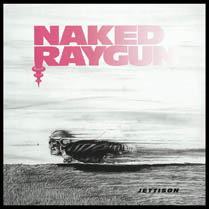
Naked Raygun - Jettison

Naked Raygun - Jettison


Storming out of the 80’s Chicago hardcore scene, Naked Raygun quickly became one of the most prominent and influential bands of their time. Blending post-punk stylings with the speed and fury of hardcore, they created a distinct niche for themselves, never being afraid to experiment with their sound or to diversify their attack. In 1988, they released their fourth and arguably best album, Jettison, which, along with Big Black’s Songs About Fucking, would act as a harbinger for many of the musical trends occurring in the Chicago scene at the time.


On Jettison, the band takes the ferocity of previous releases and tames it somewhat, relying more on strong hooks and powerful storytelling to get their point across. The vitriolic sentiment once pointed at government and military now seems more introspective, and the power of the lyrics is gained from within rather than aimed at afar. Rather than continuing at attacking the false ideals of trickle-down conservatism that permeated the times directly, they focus more on the affects of those policies. Whether it be a lament for the wastes of war (Soldier’s Requiem), or a detailed description of inner-city life (Ghetto Mechanic), the strategy works in creating a wholly realized atmosphere that encompasses the album as a zeitgeist of the times.

Which isn’t to say the fury is gone; merely re-directed in its approach. The same bottled hope and frustrations that appear on so many punk albums of the time appear here as well. The caustic anger is thick and unrelenting, giving an anthemic feel to many of the songs. This succeeds in really driving home the despondence of the themes that emerge throughout, striking a delicate balance between anger and dysphoria. The guitars are just as dense in their assault, fashioning vivid, broodingly atmospheric soundscapes. Distortion surrounds these guitars, as you can practically hear them crackle and fizz at times. Yet as rough as Jettison sounds at times, it also shows off an incredible set of pop hooks to it, as Naked Raygun utilize cutting guitar riffs and haunting backup vocals in order to effectively build the mood of the album. It shows the innovation of the band that they can create catchy punk tunes that also work as blistering hardcore masterpieces at the same time. That they can remain arty and subversive, yet still pull off a memorable pop-influenced hook that will stay in your head for days.


With Jettison, Naked Raygun created their magnum opus. It’s a high-speed expedition through the graveyards of the 80’s, as dense as it is epic, and as intelligent as it is irate. With the ability to combine pop sensibilities with the furor and velocity of hardcore, Naked Raygun set themselves apart from the pack and prove themselves as true luminaries of the American Underground. From a personal standpoint, this is the best hardcore album of the 80’s, and an absolute must for anyone with any interest in the genre.

Jettison