Showing posts with label american underground. Show all posts

Friday, November 28, 2008

Naked Raygun - All Rise


So I was sitting in a psychology lecture today, and, as psychological discussions are wont to do, the topic inevitably turned to Naked Raygun (my psychology professor is awesome). Specifically, the instructor used his desire to listen to Naked Raygun vinyls in order to explain the concept of drive in relation to Drive Reduction Theory. The analogy was a mess, but it accomplished two things: one, it made me envious (I want All Rise and Throb Throb on vinyl), and two, it transferred onto me the desire of listening to Naked Raygun. It was a situation which could have been considered ironic, but only by someone who does not fully understand the definition of irony.

Released in 1986, All Rise, Naked Raygun's third album, marked the in-between phase of a transition in which the band would evolve from the brasher punk of their debut into the noisy-but-melodic post-punk outfit seen on Jettison (see my post here). It moves away from their previous album, Throb Throb, with an increased emphasis on atmosphere and a change in production style; the sound here sounds more like their later albums than anything they had done previously. There are still some examples of blaring, balls to the wall punk, specifically on "New Dreams", which almost feels like a Throb Throb b-side, but for the most part, the album is more mature than anything the band did before it. Still, this is vintage Naked Raygun, featuring some classic riffs, and the same overriding theme of pessimism found throughout their discography.


In some ways, All Rise could be considered the younger brother to Jettison (unless you have a better metaphor, in which case I suggest you use that instead). The two albums share a great amount of similarities, but the ideas presented on All Rise are accomplished to a greater degree of success on Jettison. All Rise contains the same strongly pop-oriented song structures of Jettison, but feels more like the Buzzcocks than Big Black in doing so, with some of the hooks veering closely into pop-punk territory (see: "Mr. Gridlock"). Combining this development with the darker, more cathartic songs like "Backiash Jack" leaves this album feeling disoriented, caught between the contrasting ideas of melodic punk and noisy art-rock dissonance. The main strength of Jettison was in combining these ideas, but here, the result isn't as cohesive. While some songs pull off the feat perfectly, others just feel awkward, as if they'd rather belong on a Stiff Little Fingers album; which is likely intentional, given the degree to which the former influenced Naked Raygun (see their "Suspect Device" cover for more). It's not that these songs are bad; it's just that they don't exemplify the reasons why I listen to Naked Raygun. Their ability to integrate haunting pop hooks into a blistering punk attack is unparalleled, and it comes off a tad disappointing when they take their foot off the gas just to ape another band's approach. Not bad, just... disappointing.

But slight blemishes aside (and they are only slight), this is still a fantastic album created at a time of transition in the band's career. All Rise generally gets ignored in Naked Raygun's discography, sandwiched in between the band's two more accomplished efforts, but just because it hasn't the intensity or creativity of their other efforts doesn't mean it should be looked over in the least. Lack of cohesion aside, some of the band's best songs are on this album, and it can stand up to, if not surpass, most any punk album of its time. No, it's not Jettison, but what is?

All Rise

Friday, September 19, 2008

Pere Ubu - The Modern Dance

Pere Ubu - The Modern Dance


Named after a French proto-surrealist play, and coming off about as artsy and pretentious as that would imply, Pere Ubu was first formed in 1975 in Cleveland, Ohio. Combining art-punk sensibilities with a delightfully absurdist take on song-writing, the band created a dense and murky form of post-punk that took cues from the garage rock of the 60’s and bordered heavily on avant-garde. On the subject of Ubu, it was once written:

“Pere Ubu will be looked back on as the most important group to have come out of America in the last decade and a half. Either that or they will be entirely forgotten”

And whether you’ve heard of them or not, it shouldn’t come as much of a surprise how that one turned out. But it’s a shame really, because this attitude was very much indicative of how the band was viewed. Either you love them or disregard them as too weird, too out there, or too subversive to remain consistently listenable. While these are legitimate complaints, it rarely overshadows the insane greatness that the band was often capable of conjuring. Between David Thomas’ warbled cries, the off-key dancing of the guitar and bass, and synth-wizard Allen Ravenstine’s incredible infusion of any number of background noises, Pere Ubu channeled the bizarre to create the phenomenal. On their first album, The Modern Dance, they fully showcased this peculiar concoction, creating an influential and seminal work in the process.


Although they would eventually move into more New Wave territory, eventually landing on the other side of the pop music spectrum, make no mistake about it – The Modern Dance is very much a rock record, albeit a very arty one. The garage rock influence shines through even the densest of distortion, as the opening guitar line on “Street Waves” would certainly attest to. But it is where Pere Ubu departs from their predecessors that they become interesting. A variety of multicultural influences abound, as the band veers between any number of styles, from areas as diverse and musically different as Middle-Eastern and rockabilly. Part of this is in the tuning of the guitar; it holds very little strength here, even being overshadowed by the bass at times, much less the calamity of noise contributed by Ravenstine. As such, it sounds less like the usual Western styles of the electric or acoustic guitar, and sort of like a more twang-y version of the sitar at times (emphasis on “at times”).

Atmosphere is a big part of the Pere Ubu sound, and The Modern Dance exemplifies this through the synthetic arrangements of Allen Ravenstine. Ravenstine’s part comes in through his creation of setting that underlies the rest of the music, be it through the occasional waves of triumphant applause in “Chinese Radiation”, the industrial rhythmic clanging of “Real World”, or the ominous, air raid siren-lite sounds of “Over My Head”. His influence on this record isn’t as great as it would come to be on future releases, but it is still a big part in formulating Pere Ubu’s unique musical direction. The synths on this album work to create a very distinct atmosphere in a very different way than they would later be used, mainly through the channeling of background noises and atmospheric musical cues, rather than the dance-y synth arrangements that would later come to personify New Wave.

However, this is in many ways David Thomas’ band, as the founder and only constant member throughout Pere Ubu’s career, so I’d be remiss if I didn’t spend some time focusing on his odd, almost surreal caterwauling. Imagine an especially noisy hawk. Now, imagine that that hawk is dying, possibly due to internal bleeding, and just won’t shut up (god, this is a really bad metaphor). That’s kind of what David Thomas sounds like, a dying hawk, squealing and squawking incessantly in a high yet somber pitch as it slowly dies. Or maybe a drunken homeless man on the street, muttering to himself about whatever he pleases, and occasionally raising his voice in delightful inebriated glory. Whatever he sounds like, Thomas’ vocals are easily the most noticeable and recognizable thing about Pere Ubu, and they work to fit the eccentricities of the music seamlessly.


With The Modern Dance, Pere Ubu created an underground classic, an experimental slice of ‘avant-garage’ (Thomas’ term to placate music critics looking for a trendy expression to use in their reviews) that doesn’t disappoint. Few bands can create the same blend of abstract weirdness, much less pair it with any number of interesting musical ideas. Absurd, surreal, and only a tad disjointed, The Modern Dance stands as another important step in the ultimate merger of music and art. To this date, it remains important in its influence, even if not nearly as many people remember it as they should.

The Modern Dance

Friday, August 15, 2008

Bad Brains - Bad Brains

Bad Brains - Bad Brains


What else is there to say about Bad Brains? Originally a jazz fusion band named Mind Power, these early hardcore luminaries would eventually adopt a grinding rebellious attitude to their music, turning into one of the bands who would shape 80’s punk rock at its core. Formed by four black Rastafarians, the band was an oddity in the D.C. scene, espousing peace and love one second, and furious anger the next. Known early on for their energetic and chaotic live shows, as well as their technical superiority when matched against their peers, Bad Brains would reach much notoriety within the D.C. hardcore scene, eventually being banned from a number of clubs and being forced to re-locate to New York (which would become the subject of the song “Banned in D.C.”). They released their first album in 1982, the self-titled Bad Brains, an album heralded to this day for its influence, as well as its innovative blending of numerous disparate genres.


One of the most interesting things about this album is the unique way the band incorporated a wide number of influences into a fast-paced and dynamic form of hardcore. Guitarist Dr. Know could shift from searing punk rapidity (“Attitude”) to lumbering metal heaviness (“Supertouch/Shitfit”), to gentle reggae beats (“Leaving Babylon”) with skill and proficiency in each area. This new and novel take on punk music was almost unheard of, as the band could jump back and forth between slow, lulling reggae tunes about inner peace, to short, frenzied bursts of anger taking umbrage at anything and everything.

But it wasn’t this duality that made the band great; it was their frantic, psychotic take on hardcore, brimming with energy and ethos from start to finish. It was singer H.R.’s notable wails, screaming each note with passion and fury. It was the way the bass played with the guitar to create an ominous heaviness not unlike Black Sabbath in songs like “Fearless Vampire Killers” and "Big Take Over". It was the way the band created intensity out of nothing, almost bridging over into the sort of horror punk bands like the Misfits were playing at the time. It was the combination of these and many other things which made them unique, and which made this album unique.


With their self-titled debut, Bad Brains created a classic, a punk masterpiece that refuses to play by anyone else’s rules. By summoning a number of contrasting influences into one package, and playing it with energy and conviction, they ended up influencing a generation of future artists.

What else is there to say?

Friday, August 1, 2008

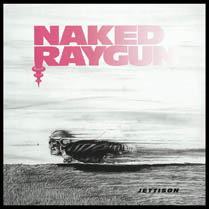
Naked Raygun - Jettison

Naked Raygun - Jettison


Storming out of the 80’s Chicago hardcore scene, Naked Raygun quickly became one of the most prominent and influential bands of their time. Blending post-punk stylings with the speed and fury of hardcore, they created a distinct niche for themselves, never being afraid to experiment with their sound or to diversify their attack. In 1988, they released their fourth and arguably best album, Jettison, which, along with Big Black’s Songs About Fucking, would act as a harbinger for many of the musical trends occurring in the Chicago scene at the time.


On Jettison, the band takes the ferocity of previous releases and tames it somewhat, relying more on strong hooks and powerful storytelling to get their point across. The vitriolic sentiment once pointed at government and military now seems more introspective, and the power of the lyrics is gained from within rather than aimed at afar. Rather than continuing at attacking the false ideals of trickle-down conservatism that permeated the times directly, they focus more on the affects of those policies. Whether it be a lament for the wastes of war (Soldier’s Requiem), or a detailed description of inner-city life (Ghetto Mechanic), the strategy works in creating a wholly realized atmosphere that encompasses the album as a zeitgeist of the times.

Which isn’t to say the fury is gone; merely re-directed in its approach. The same bottled hope and frustrations that appear on so many punk albums of the time appear here as well. The caustic anger is thick and unrelenting, giving an anthemic feel to many of the songs. This succeeds in really driving home the despondence of the themes that emerge throughout, striking a delicate balance between anger and dysphoria. The guitars are just as dense in their assault, fashioning vivid, broodingly atmospheric soundscapes. Distortion surrounds these guitars, as you can practically hear them crackle and fizz at times. Yet as rough as Jettison sounds at times, it also shows off an incredible set of pop hooks to it, as Naked Raygun utilize cutting guitar riffs and haunting backup vocals in order to effectively build the mood of the album. It shows the innovation of the band that they can create catchy punk tunes that also work as blistering hardcore masterpieces at the same time. That they can remain arty and subversive, yet still pull off a memorable pop-influenced hook that will stay in your head for days.


With Jettison, Naked Raygun created their magnum opus. It’s a high-speed expedition through the graveyards of the 80’s, as dense as it is epic, and as intelligent as it is irate. With the ability to combine pop sensibilities with the furor and velocity of hardcore, Naked Raygun set themselves apart from the pack and prove themselves as true luminaries of the American Underground. From a personal standpoint, this is the best hardcore album of the 80’s, and an absolute must for anyone with any interest in the genre.

Jettison

Sunday, July 20, 2008

Mission of Burma - Signals, Calls and Marches EP

Mission of Burma - Signals, Calls and Marches


Imagine the Stooges. Now, imagine taking Raw Power, rolling it around in fuzz and distortion, and throwing in lyrics about surrealist and existentialist philosophy. Amplify it by a thousand, and you have Mission of Burma.

Born out of the ashes of a short-lived Boston area band called Moving Parts, friends Roger Miller (guitar) and Clint Conley (bass), enlisting the help of drummer Peter Prescott, formed Mission of Burma in 1979. Mission of Burma quickly turned heads, gaining underground support and critical acclaim with both the release of their debut single “Academy Fight Song”, and their ear-shattering live shows. They would later release an EP and a full-length recording, on their way to reaching the zenith of Boston’s growing alternative scene before their break-up four years later, due to Miller’s worsening case of tinnitus.


To best understand Mission of Burma is to understand their influence and their innovation as a band. This was a group that played post-punk like no other, creating some of the most elaborate and improbable soundscapes ever to grace vinyl. They played with a sort of instrumental ferocity that is rarely, if ever matched, forging raucous arty punk through some of the most creative use of tape loops to date. Their music was often dark in tone, going back and forth between quiet minimalism to pounding desperation. Flanked by the thick, cascading guitar riffs of Roger Miler and the all-encompassing layers of distortion backing him up, Mission of Burma were noisy, loud, and often brilliant.

When cited, they are generally remembered for their one full-length recording, Vs., but their best work, in my mind, was the 1981 release Signals, Calls and Marches. From the opening isolated guitar line of “That’s When I Reach For My Revolver”, it becomes quickly aware that this is an entirely focused piece of work. One can almost hear the desolation in the background as the protagonist cries out for all that he has lost. The pounding drums guide this song along as it builds into its austere climax, remaining remarkably poppy and accessible despite its bleak subject matter. From here, we move onto the far rougher sounds of “Outlaw”, then on to the angry criticisms of “Fame and Fortune”, and then to the steady forceful punk of “This Is Not a Photograph”.


The final two songs are both stunning in their beauty. “Red” is a brooding anthem of sorts, progressed by striking guitar patterns and a hammering drum beat. The song is permeated by a haunting set of backup vocals, lending creepy disposition to the song that only grows as the singer cries “things are crumbling outside me”. Finishing the album is the absolutely exquisite instrumental piece, “All World Cowboy Romance”. Using the richness of the guitars to their full potential, Miller and Conley intertwine their instruments to construct a lush, luxuriant body of sound that has to be heard to be believed. Prescott wails away on the drums, orchestrating and directing the tempo with his almost methodical pace. Personally speaking, this is one of the finest instrumentals I have ever heard, and ranks as one of my favourite songs of all-time. Eventually the band reaches a serene crescendo, one still pulsating with the power of the drums as it climaxes and denoues.

With Signals, Calls and Marches, Mission of Burma created their greatest achievement, and set the stage for one of the most influential bands of the 80’s. This is one of the rare occasions in which an EP is the best thing in a band’s discography, and, given the quality of their other releases, this is not a remark to be taken lightly. It’s not just arty; it’s a full-fledged work of art on the same plane as, or perhaps even surpassing the best that post-punk has to offer.

(Note: The 1997 re-release includes the singles "Academy Fight Song" and "Max Ernst" as bonus tracks, and they are included in the link below.)

Signals, Calls and Marches